
You can take the Saffa out of South Africa, but you will never take the braai out of the Saffa. For many of us, it's the first thing we set up in a new home — sometimes before the beds. But keeping the braai alive abroad comes with new questions: where do you get decent wood? What do you do when the butcher has never heard of boerewors? Are you even allowed to make a fire here?
This guide answers all of that — whether you're planning a braai in Australia, a braai in the UK drizzle, or a braai in the snow in Canada.
A braai is not a barbecue (explain it gently)
Your new neighbours may call it a barbecue, a barbie or a cookout. Let them. But part of the joy of a braai abroad is sharing what makes it different:
- It's about the fire. Traditionally you cook over coals from real wood or charcoal, and making the fire is half the ritual.
- It takes its time. A braai is an afternoon, not a quick meal. The standing around the fire is the point.
- The food is specific. Boerewors, chops, sosaties, braaibroodjies, pap and sous — and often a potjie on the side.
- There's a braaimaster. One person owns the tongs. Everyone else offers advice.
Many countries have their own grilling culture, and that's a great bridge: your Aussie, Kiwi or Canadian mates will understand the idea immediately — they just haven't tasted a proper braaibroodjie yet.
Wood, charcoal and your fire
Finding good braai wood abroad is one of the most common questions Saffas ask. The species you grew up with probably don't grow where you live now, so you'll be working with local options.
What to look for
- Seasoned hardwood — dense, dry wood burns into long-lasting coals. Ask your local firewood supplier which of their hardwoods are good for cooking.
- Never use treated or painted timber, pallets or offcuts from building sites — they can release harmful chemicals.
- Lumpwood charcoal is a solid fallback and easy to find at hardware stores, garden centres and supermarkets.
- Charcoal briquettes burn evenly and long — handy for bigger cooks.
- Search “firewood delivery [suburb]” or “cooking wood [city]” and ask other Saffas which suppliers they use.
If you live in an apartment or somewhere open fires aren't practical, a gas or electric grill won't give you the same smoky flavour — but the company still makes it a braai. Nobody's checking your credentials.
Finding boerewors and braai meat
Boerewors is usually the hardest part. In cities with big South African communities, you'll often find local makers, butchers who make it to order, and South African shops that stock it. Elsewhere, you may need to get creative.
- Search “boerewors near me” and “south african butcher [city]”.
- Ask a local butcher to make a batch with a boerewors spice mix — many will if you order a decent amount.
- Make your own. With a sausage stuffer, coarse-minced beef and pork, and the right spices (coriander is key), home-made wors is very doable.
- Lamb chops, sosaties and chicken are easy to find anywhere — and a marinade from home makes them taste like it.
Our guide to finding South African shops and biltong abroad has a full list of searches and questions to ask suppliers.
Where you can (and can't) braai
This is where living abroad genuinely differs from home. Rules about fires vary by country, state, council and even by season, so check before you light up.
Public parks and beaches
Many parks — particularly in Australia and New Zealand — have free or coin-operated public barbecues, usually gas or electric hotplates. They're great for a relaxed group lunch but not a wood fire. Open fires and portable charcoal braais are often restricted in public spaces, so check the signs and the council website first.
Cold-climate braaing
In the UK, Canada and northern Europe, the challenge is weather, not fire bans. Saffas there braai year-round anyway: a covered patio, a sturdy kettle braai, good gloves and a warm jacket go a long way. A potjie is perfect winter food.
Hosting a braai for new friends
A braai is the best icebreaker a South African has. Inviting neighbours, colleagues and other parents is one of the fastest ways to build a life in a new place.
The hosting checklist
- Light the fire earlier than you think — coals take time, and hungry guests are grumpy guests.
- Explain the menu. “Boerewors” and “pap” need a one-line introduction.
- Have a vegetarian option; braaibroodjies and mielies win everyone over.
- Keep it “bring your own drinks” if that’s the local norm — ask a local friend.
- Check with neighbours if smoke might drift their way. It builds goodwill.
- Keep water or an extinguisher nearby and never leave the fire unattended.
Braai with your mense on Oorsee
The Oorsee app is full of braai-mad South Africans. Use it to:
- Find braais and meetups in your city through events — or host your own and invite local Saffas.
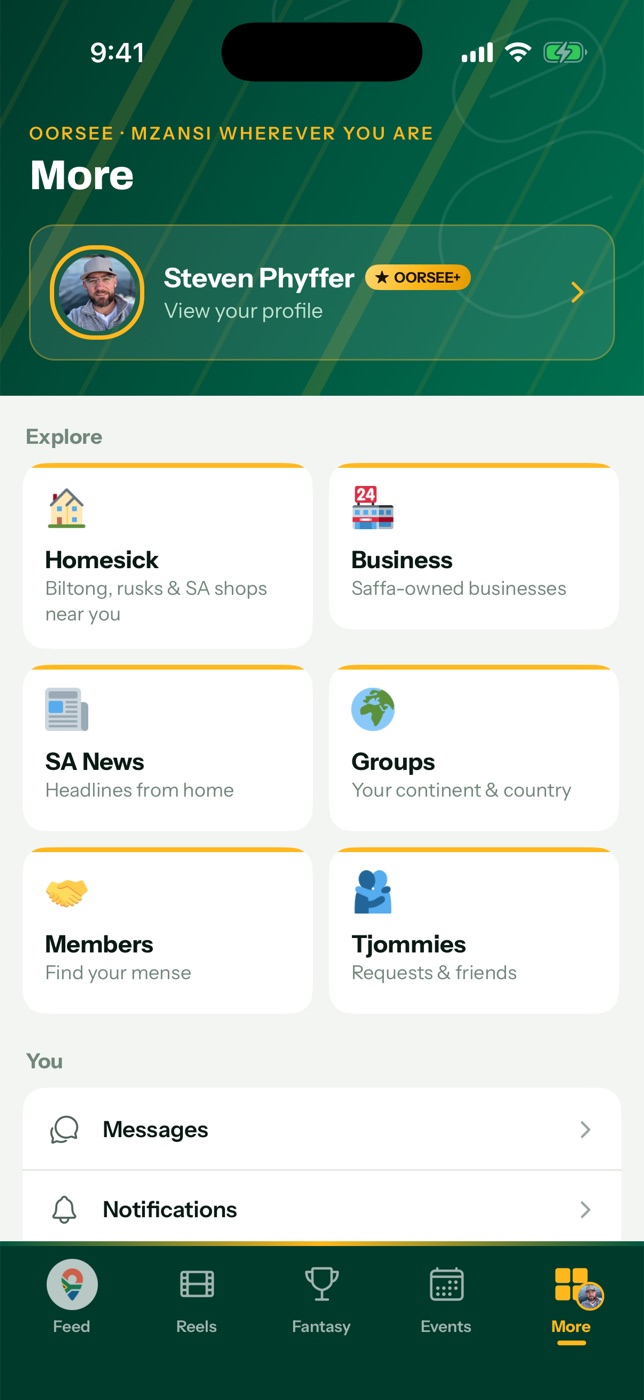
- Find boerewors and SA groceries with the Homesick shop finder and the SA business directory.
- Enter Braai of the Month — show off your coals and vote for the champion.
- Ask your group where people get their wood, wors and spices locally.
And the South Africans Living Abroad Facebook group is always good for a braai debate — gas versus wood has been going for years and will never be settled.
Get Oorsee · Free
Keep the braai alive with Oorsee
- Find braais and meetups in your city — or host your own
- Homesick finder for boerewors, spices and SA groceries
- Enter Braai of the Month and show off your coals
Frequently asked questions
Can I have a braai in Australia?
Yes — South Africans braai all over Australia. Check your state or territory fire authority for fire bans before lighting a wood or charcoal fire, and check council and rental rules for backyard fires. Many parks have public gas or electric barbecues.
What wood is best for a braai abroad?
Look for dry, seasoned hardwood that burns into long-lasting coals, and ask local firewood suppliers which woods are good for cooking. Never use treated timber or pallets. Lumpwood charcoal is a good, easy-to-find alternative.
Where can I buy boerewors near me?
Search "boerewors near me" and "south african butcher" plus your city, check South African shops, or ask a local butcher to make it with a boerewors spice mix. The Oorsee app’s Homesick finder and business directory list SA food sellers near you.
Can I braai in public parks?
It depends on the country and council. Many parks in Australia and New Zealand have public gas or electric barbecues, but open fires and charcoal braais are often restricted. Check signs and your council’s rules.
How do I braai in the UK or Canada in winter?
Plenty of South Africans braai year-round. A covered area, a kettle braai with a lid, good gloves and charcoal or dry hardwood make it easy — and a potjie is ideal cold-weather food.
How do I explain a braai to non-South Africans?
Keep it simple: a braai is a South African social cook-out over wood or charcoal coals, usually a long afternoon, with boerewors, chops and braaibroodjies. The best explanation is an invitation.
South African communities near you
See what's happening where Saffas live.